fail to speak, fail to have purpose, fail to be uttered, fail to have influence, fail to even form.
The silence that is external is drowned out by the noise, the messages, the words that are interior, unspoken, hushed.
The fear of misspeaking, of being misinterpreted can silence the words that bubble up in want to … communicate, be heard, understood.
If only someone could read out minds, our hearts, souls. If only there was one who understood our pondering without our lips being parted.
We long for our words to be known, for they represent the thoughts our minds contain. That twist and turn and swirl inwardly, like clashing cymbals and clanging drums. Noise. Noise. Noise.
It is only in the presence of one who can read our thoughts, know our hearts and minds, that the stillness of peace takes over, contentment saturating our innermost core.
For we are known … and to be known is what we all desire even more than words. What we as humans desire most is to know we are known intimately by our Creator.
On the day you gave birth, I was so excited to meet that little bundle, but it was you who was paramount on my mind that day.
What is it about the nostalgia of your child doing something you remember doing, entering into a phase you’ve walked, on the cusp of so much more than they know or understand? But, mommas, we know.
We know because we have been there, are currently there, will always be there. W know how this is not a phase that waxes and wanes, it is permanent, forever changing us from the inside out.
So much changes in the body, mind and soul of a woman who becomes a mum. There is even science to back that up, as there is evidence that fetal cells can transfer into the mother’s body, living within the mother long beyond their birth. So, that little bundle, she is within you still, while also being on the outside.
The day before her birth I was thinking of you, in my mind. Thinking of how these are your last minutes and hours of an innocence of sorts. How you would awaken the next morning and be forward focused, heading out the door to go to the hospital, while you were unaware that there is no going back to life before motherhood, who you were before motherhood. That you would return to your home not just with a new creation, but as a new creation with a new filter for life.
You are going to see your baby girl each day and feel awe that is just about going to make you burst. Her needs will be paramount in your thoughts, even when you would just like a moment to yourself. I remember the words of my grandmother, when you were born,
“It is hard to put your husband first now.”
The good thing is that you and your husband now share this intoxicating love and devotion for this little human who shares your home, your hearts, and even your DNA. And the thing is, having a child changes every relationship from now onward, because you see everyone through the eyes of who you are, a human, a woman, a mum.
You will watch movies, ads, other video clips (even children’s programing) and find yourself responding differently. Tears may flow, anger may burn, a level of righteousness and advocacy you had never known may erupt from within. Your filter is changed, you see things through the protective view of a mum (and it will break your heart, warm your heart, grow your heart).
Her cry will move something in the core of your physical and mental being. And this will continue when she falls and bumps her head, when she doesn’t get what she wants, when you have to leave her in the care of another and she clings to you with arms (and sobs), when a peer rejects her, when she fails a test, when a first love breaks her heart, when she experiences loss and grief, when … she is about to become a mum.
You will encounter odd changes within yourself, physically too. Like riding amusement park rides and discovering that something changed within you because twirling around, and around, and around creates a while new nauseous response that you’d never experienced before. Or foods that you once loved (or disliked) tasting differently.
You will never be the same, my daughter. For now you too have a child, a daughter, and everything has changed. And it is the most amazing metamorphosis available to us. So, as you emerge from the cocoon that has prepared and brought you to this most beautiful altering, know that you have all that you need within you. And when this eternal transformation feels heavy, there are others that surround you, who have walked … are walking just ahead of you.
It is true I was created in you. It is also true That you were created for me. I owned your voice. It was shaped and tuned to soothe me. Your arms were molded Into a cradle to hold me, to rock me. The scent of your body was the air Perfumed for me to breathe. Mother, During those early, dearest days I did not dream that you had A large life which included me, For I had a life Which was only you. ...
Today you awoke to the best day. A day of excitement and anticipation. A day of dreams about to enfold. A day when your dreams emerge in technicolor, when hopes become sight.
Life will never be the same again … each of you will never be the same again.
It is the juxtaposition of the first day of your parenting adventure and the last day of just you two.
How much is to come into your lives, along with that little bundle.
That miracle of the first cry, the magnetic force that just will not allow you to divert your look into those inky eyes in which you see something you have never seen before, and yet something you have always known in your being.
The fear that you will break that fragile body and yet terror at how their cries rip at something within you that you had never before known exists.
The fear … it does not ever end and yet … the joys are eternal as well.
The aches … over and over they will rise and yet … the warmth of loving another is the essence of true comfort.
The cries … from hunger, from pain, from rejection, from anger, from something you have said or done … are nothing compared to inhaling their unique scent that is utopia itself (and never fades).
The growth … always up and away … it is excitement and dread for parents, their growth moves them on in life, and away from you … and yet, when they return (from a night’s sleep, from a first day of kindergarten, from an overnight, from university, from … their life) and share their life with you, your cup will overflow.
Today you will feel feelings and think thoughts you never knew to exist before. You will know wonder as if for the first time. You will feel so much smaller and it leaves you feeling more real than you thought possible. You will feel your heart enlarge til it might burst. There is an authenticity, a realness of life as if the air itself enters and exits your lungs from a deeper deep.
Your senses are all more heightened and you use them all spontaneously, innately, as if fulfilling natural instincts that have lain dormant since your own birth. Your ears will both delight and desire to cure the reason for the cries. You eyes will behold their eyes as if drunk on their very gaze. You lips will seek to kiss their skin, claiming it as your own. You lungs drinking in their very scent. You will be smitten with all of it, all of them.
Today you will feel a sense of purpose that you cannot achieve from any other earthly pursuit … as though it is, in fact, other-worldly.
It’s a good day, a laborious day.
I am not yet born; provide me With water to dandle me, grass to grow for me, trees to talk to me, sky to sing to me, birds and a white light in the back of my mind to guide me.
So, it happened again, as it has happened so many times.
I am driving in my car and a song I have heard many times comes on the radio, but … this time … I really hear it.
I often think that when this happens, it is then that God wants me to hear His voice. And once I hear it, I cannot unhear it. It is unmistakable to me that God is pursuing me with a message.
This time the message was not completely new as it was an old song, wrapped into new words. A bit of a sidestep from the, but with all of the depth of the original song.
The first words I heard, were not the first words, but the second line,
don’t let me face this loneliness alone
That caught my attention, for I knew a number in my circle who were struggling with, facing, loneliness … and my heart was heavy for them.
Then the fourth line,
I need a peace that only heaven knows
Oh, that peace that passes (human) understanding! How many times have I written those words of hope for those who grieve, sincerely praying that the words become manifest in the lives of those sorrowing over the earthly loss of a loved one?
Jesus could you please Just sit and cry with me …
Oh yes, the human cry to experience the empathy of God. To know that He knows the depth of our anguish, our lament.
And then it was the line that I remembered saying to God, so many years ago, as a young woman, heartbroken …
Til I can sing,
It is well with my soul It is well with my soul Whatever my life, you are still my God
It was a moment between my God and I, all those years ago. I was in the depths of despair, and despair is not a enviable place to be. All I knew at the time was that I did not want my sorrow to be out of proportion to my relationship with my heavenly Father. So, I chose a song, an old hymn, and sang it over, and over and over again. And I told my God I would sing the words of confidence until I felt the confidence of those words.
And so I sang the words of Horatio Spafford,
When peace like a river, attendeth my way When sorrows like sea billows roll Whatever my lot, thou hast taught me to say It is well, it is well, with my soul
I do not know how many times I had to sing them over and over until I felt them, knowing that it it truly was well with my soul … whatever my lot. And when I could sing them with conviction, I knew things were righted in my soul and heart, in my life. Not that God was righted, but my very soul was right with God.
Apparently the songwriters of MercyMe also understood the struggle of singing the definitive words, it is well with my soul. So, they wrote the concept of the old hymn into more of a lament, of an ‘in process’ honesty over a ‘I’ve arrived’ hope. It is real … sincere (not that the original hymn is not), relatable.
The thing is it is a reminder of the reality and benefit of lament. Of crying out to God our sorrow, grief and even anger … acknowledging that His shoulders are big enough to handle our human emotions. Acknowledging that, whether we yet feel it or not, our souls are well, and our pursuit is toward righting the reality and the feelings until they are in line with each other.
Laments are prayers that erupt from wounds, burst out of unbearable pain, and bring it to language. Laments complain, shout, and protest. They take anger and despair before God and the community. They grieve. They argue. They find fault. Without complaint there is no lament form. Although laments appear disruptive of God’s word, they are acts of fidelity. In vulnerability and honesty, they cling obstinately to God and demand for God to see, hear, act.
It is a story that provides two sides of the same coin.
Brothers. They grew up in the same home, same opportunities, same blessings, same curses, same father.
And yet …
The story opens with one brother (the younger) wanting his share of the estate (Luke 15:12). So what the son is asking is if he could have his inheritance … remember, the son’s father is the one the son is asking … his father is still alive. How ludicrous to ask for ones inheritance from the parent, when the parent is not dead. What the son is asking is not for his inheritance, but he wants a third of father’s estate, his father’s worth, as the father is not yet dead. He is asking for what is not yet his.
(a third, as the younger son, he would receive a third of the estate and the elder brother would receive two thirds).
And Jesus (who is telling the story) says that the father divided his property between them (v.12). No note of hesitancy or discussion, for what the father felt about this request is immaterial to the story, only that he fulfilled the request of the son (though, the recording of his waiting for his son to return, later in the story, is very relevant).
Then, in two short sentences, the predictable result of the son’s demand is that his inheritance is gone … by his own misuse of what his father gave him.
It was not until his life hit it’s lowest, surrounded by pigs in their slop, that he came to his senses (v. 17) and realized the hedge of protection he would be under as a servant of his father … perhaps he then realized the hedge of protection he had always been under as the son of his good father.
So he journeyed home. Upon reaching the city gates, a man was approaching this wayward son, approaching in a run. His father had been waiting for him. His father knew, predicted, the folly, the poor decisions that the son would get into. And as the son humbled himself (perhaps for the first time in his life) and admitted that he had sinned against heaven and against his father (v. 21).
But, the father, responded as a father filled with love, a father who knew that loving means there will be mistakes, for love is a always a choice, declared, this son of mine was dead and is alive again; he was lost and is found (v. 24).
And a celebration breaks out.
The end …
NOT!
For that is only half of the story, that is only the story of one son. This is the story of two sons.
While a welcome back party was going on at the home, the older son had been in the field (v. 25) … we presume he was working in the field. You know … doing what he was supposed to be doing.
When this older brother heard the reason for the celebration, he didn’t just simmer, but he became angry and refused to go in (v. 28). Basically, his knickers were firmly in a knot and he was done with following the formula of how to be a good son. Done with his spoiled little brother. Done with breaking his back, doing what was expected of him. Done with being the dependable son, the faithful son. Done with doing it all right and yet, not being celebrated for his choice to follow the rules.
When his father went out and pleaded with him (v. 28), when his father showed the older brother his face, it it then that the older brother spoke what was really on his heart (and, no doubt was in his heart for years):
‘Look! All these years I’ve been slaving for you and never disobeyed your orders. Yet you never gave me even a young goat so I could celebrate with my friends. But when this son of yours who has squandered your property with prostitutes comes home, you kill the fattened calf for him!’ (v. 29-30).
And now we see that the root of the problem has nothing to do with his younger brother, but pride.
I have been slaving for you … I is a mighty powerful word. It declares independence. It is as though the older brother is declaring (much like Frank Sinatra) I did it my way … except along with the proclaimed independence, he announces his motivation … slavery … slaving for you. This brother has not been good, or responsible, or faithful, or hard working out of love and respect for his father, but out of obligation.
This, elder brother had a firm belief in one thing …
his rule-keeping his obedience his works
This tale of two sons, two very different sons who entered a life where they both received the same opportunities, from the same loving father. But, only one son is the prodigal, because only one son recognized that he had sinned against heaven and against his father (v. 21). Only one son realized that he could not save himself.
The one son … his were sins that led him to see himself as bad for the bad things he had done.
The other son … his were the sins of believing he was good because of the good he did.
“I have taken all my good deeds, and all my bad deeds, and have cast them together in a heap before the Lord, and have fled from both to Jesus Christ, and in him I have sweet peace.”
It was our younger daughter’s wedding day and I was on the upper deck, enjoying a morning coffee and taking a deep breath. In the moment I was so conscious that each breath is a gift and looked to the blue sky. Three tiny birds flitted in front of me, up and off to the right, out of sight and I smile. In that moment I saw our three, playing joyfully in the sky of today. Though they are now adults, and they too fly out of my sight, unaware that I am watching them … and I take a deep breath and I smile.
And a thought came to my conscious,
Carole, are you ready to fly? Are you ready to let go of this life, of breath, of the ones you love, for what is next?
What a thought on a happy, joyful day … and yet …
I immediately whispered that thought, that question to myself.
And I thought of my girls, living life with the ones they love and who love them.
I thought of my grandbaby enroute, how bathed in prayer already.
I thought of my son, strong, steady and following his God.
I thought of my husband, the one whom I love.
I thought of my mum, who has told me every day, I love you.
and then I whispered,
as though it was not a response of my mind …
I am ready.
I do not want to leave these loves, but … I am ready.
I am hoping it is not through pain, but … I am ready.
I still have hopes and plans, but … I am ready.
This was not a thought born of sadness or depression. Not from apathy or despair. I cannot say exactly where or why it came to mind at all, though perhaps at line of thinking that is healthy to entertain once in a while.
I do not think of death, or heaven very often. I am relatively healthy, I work, have family and friends who fill my days, my thoughts. And yet, as a follower of Christ, I believe that I have treasures that await me in heaven. Not valuables as we see them here and now, but the priceless treasures of existence without pain, or sickness, or heartache, or disaster, or hate, or loneliness, or death. Heaven is the place of truth, promises kept, joy, love, Jesus.
The Apostle, Paul spoke of death, dying and heaven and one who must have put much more thought into eternity:
I trust that my life will bring honor to Christ, whether I live or die. For to me, living means living for Christ, and dying is even better. But if I live, I can do more fruitful work for Christ. So I really don’t know which is better. I’m torn between two desires: I long to go and be with Christ, which would be far better for me. But for your sakes, it is better that I continue to live.
Philippians 1:20-24
Paul is expressing a conundrum, back and forth between the reality of now and the hope of what is to come. In his words I read a heart that longs to be with his Savior, a soul that knows this world is not his home, not what he was made for.
So, I come back to that question that sung from those three birds in the sky,
Carole, are you ready to fly? Are you ready to let go of this life, of breath, of the ones you love, for what is next?
Malcolm Gladwell asked this question in a podcast (Revisionist History: The Basement Tapes, Aug 16, 2017) I was listening to the other day … and it stuck in my mind all day, all night. Perhaps because Father’s Day was approaching.
I have never been a dad, never will be. I cannot get into the thoughts of a man who is a father but I do know what it is to be a child of man, a daughter of a father. So, maybe I can relate with Mr. Gladwell’s question … maybe we all can.
Fathers are not all the same, not all equal. Not all fathers are good (nor are they all bad). Is the obligation of every child equal?
These are questions I have been asking … hard questions. I have come to few conclusions, but one keeps coming back to me.
As children of our fathers, we have no power to change what has been done to us … he good, the bad and the ugly. We are only responsible for ourselves and our actions. As adult children of our fathers, we are the only ones responsible for what we do with what our fathers have given to us.
“I cannot go back and relive my life, it just is what it is, but I can see to it that the grace that the Lord has poured on me is not in vain. That is my hope.”
Beth Moore
I remember a time, a really busy time in my life, our home and family. Our kids were involved in various activities, we had two international students living with us, hubby was a church pastor in constant demand, I had a job as well as being the head wrangler of all persons and pets under our roof. Tired was my never-ending experience of life. One day I received a letter from my dad, who I loved and who I knew loved me. In the letter he got real with me about his (and my mum’s) life. They were lonely, they missed me and he was asking that I make more effort to be in contact with them.
I will be honest, my first response as I read his words was, dad, you have no idea what my life is like right now. Then I realized, I had no idea of what his life is like … until he told me. So, I quietly vowed to pull my big girl pants us and just honor him/them. Not because they deserved it, so much as honoring him was more about me, about who I was and who I wanted to be.
It may be that you have had a father that was horrible, hurtful, even dangerous. And maybe your best obligation to him, is to learn from him and his actions.
Or it may be that your relationship with your father disintegrated over time and you aren’t even sure where the downturn began. As an adult, what is your best obligation to him?
What I am trying to say is, as adult children, perhaps our obligation to our fathers … it is not dependent on them, it is dependent on us.
As my baby girl and her love make their marriage vows this weekend, there are two authorities I want to refer to as I wish them both all the best in their married life together.
Not so surprisingly, the first is from the Bible and it is the very first time marriage is mentioned:
That is why a man leaves his father and mother and unites with his wife, and they become one flesh.
Genesis 2:24
This first instruction pertaining to marriage is not about becoming one flesh, not about uniting with your husband/wife. The first instruction that Bible gives about marriage is
LEAVE
No romanticism, just LEAVE.
It is to leave your parent’s home, leave your original family unit. Strong’s Concordance says the word here means to forsake, loose … this is not just leave as a ceremonial, temporary happening … this is abandonment, walking away and closing the door … permanently. It is not just a physical leaving, it is a leaving of dependence, a leaving of the habits of the past, even a leaving ones original identity.
Individuals cannot become a new family unit without leaving, letting go. We let go of what was home, what was our immediate family, let go of that security, we let go of the roles those individuals played in our life, we let go of who we were in our family of origin … let go of what has defined us to this point in life.
It all sounds so dramatic, because it is.
As you commit your lives to each other, there is a tearing, a ripping, a rending.
Honestly, it reminds me of childbirth. There is this moment when a child is about to be fully born into this world, when, as a mum, you feel such excitement for what is to come but … she realizes that in moments, this life within her … she will need to share them with others. It is the moments just before the child and the mother are physically separated, forever. No longer one, but now two.
And so, in marriage, you and the one you love will leave your immediate families …
This makes me think of the words of the second authority who is one of my most favorite philosophers:
“The past can hurt. But the way I see it, you can either run from it or learn from it.”
Rafiki – The Lion King
So, as you leave your family units of origin, as you leave your pasts … do not leave as if running away, but leave with hearts and minds that have learned deeply from all you have observed in those family units. Learn from the mistakes of your parents, grandparents and others. Learn from us and live differently, live determined to duplicate what was good and turn away from what was not.
The two of you are adults, fully able to make your own choices. You are now responsible fully for those choices, for your relationships, for how you live your new life together … for you are no longer children (haven’t been in quite a time now). Do not grab onto the thinking that you have to carry the negatives of your upbringings into your new life together, for it is you, as adults, who are now responsible for your choices, your habits, your relationships.
Learn from the past …
Leave it in the past …
… so that you can live a life where the past can be redeemed.
I am so excited for you both. May you look back years from now and realize that today is when you loved each other the least.
There is a time in a woman’s life when she develops greater understanding for those in the midst of adolescence, when bodies and minds and every relationship around them is experienced differently. It is confusing, there are a multitude of emotions, and their bodies are changing in both weird and wonderful ways.
And for the woman, it is called menopause.
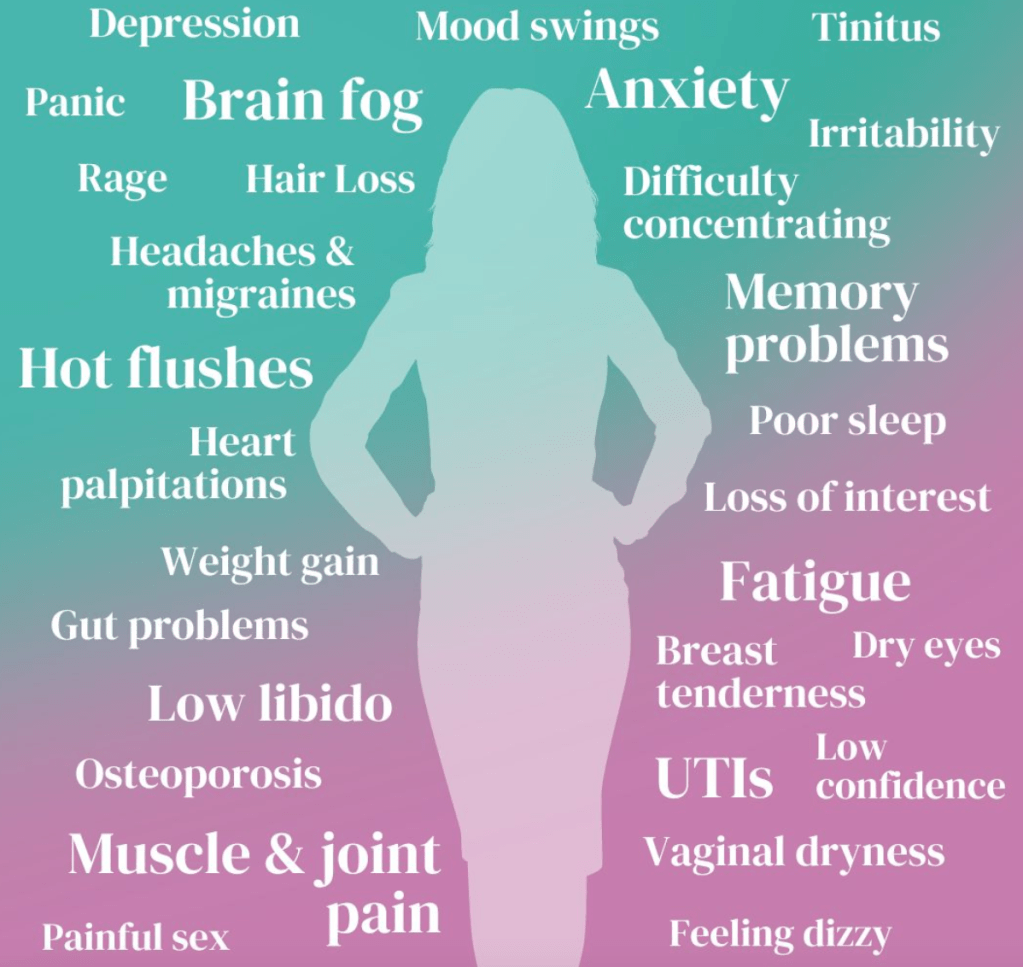
Though most think of menopause as a time when menstrual cycles end, hot flashes begin and weight packs on (without the joy of extra chocolate), fries or other deliciousness, these are just the tip of the midlife iceberg of this second adolescence for women.
My own first experience was that of the cessation of menstruation … and it was pure joy! After a couple years of bleeding more than not, I purchased white pants and revelled in wearing them whenever I wanted! My mind was no longer led along by hormones and I felt like I was more me than I had ever been. My closest relationships became even better as I had the clarity and capacity to focus in new ways. I was looking forward to the days to come.
Then … 2 inch hairs would appear on my chin, seemingly from evening to morning. My muscles started aching … for no reason. My eyesight became confusing (do I squint or back up?). My Everready Bunny energy had hopped away. The filter that once ensured the I bite my tongue no longer existed. My skin was itchy … all the time. My sense of taste and smell changed … leaving me constantly wondering if I was the bad smell. The patience I once so appreciated within who I was was replaced by finger and toe tapping. Skin began … to move, downward. I began to feel … kinda anxious, where I had not, in years before.
But, even greater changes happened, my dad, my ‘person’ died. I was now the meat, cheese and lettuce in the sandwich of life. Beginning to become more support to my mum, while still having young adult ‘kids’ who depended on me too. I became disillusioned by a job I had loved for years, because the role was no longer that of a trusted professional, but instead that of one who did only as they were told. Then hubby had a professional and physical upheaval that grossly affected our whole family, in every way and (for awhile) I became a caregiver to the one my heart loved. No part of our lives stayed the same. Our social, relational and spiritual community was gone, our financial security toppled, and our kid’s understanding of people of faith disintegrated to dust. Our kids grew into adulthood and my role in those relationships changed too.
I didn’t know myself, was at the end of myself.
There was a loneliness within me that went deeper than I’d ever known. A purposelessness of life. A sense of failure. A wandering in the desert of my life. Feeling dried up … from the inside out. All of the if-thens that I had held onto in earlier years had shown themselves to be lies.
Words I had never known personally attached to me, words like failure, rejection, useless, confused, unlovable.
Though the life events may vary, my experience of this second adolescence is not new of uncommon. Oh we women expect to be awaken by tropical moments, but the hit to our self-confidence, our abilities, the changes that smack us in our work and employment and closest relationships … those are not book titles in the change of life section of the bookstore or online. And yet, those are the changes that can take the breath from our lungs, the joy from the days we have left.
The song, below … it just hit right where I needed it … maybe it will hit you at the right time, in the right place too.
Not everything changes in life, whether adolescence, or second adolescence …
“You remind me who I am when I look in the mirror and I’m not so sure“
It started with one verse. A heavy, life-altering verse that I read today while sipping my morning brew, not pausing to feel the weight of the words and how desperately heavy they felt to the families, the women who would be forced to live to play such a heartbreaking role in history.
Then Pharaoh gave this order to all his people: “Every Hebrew boy that is born you must throw into the Nile…”
Exodus 1:22
And with that order, baby boys up to about two years of age were wiped out. This order was carried out on somewhere between two and eight years. Thousands, perhaps tens or hundreds of thousands were killed … but to the mothers, did any number over their one matter?
Then the story continues into Exodus 2 (1-10), with the story of family of Moses, centering on his mother, Jochebed:
Now a man of the tribe of Levi married a Levite woman, and she became pregnant and gave birth to a son. When she saw that he was a fine child, she hid him for three months. But when she could hide him no longer, she got a papyrus basket for him and coated it with tar and pitch. Then she placed the child in it and put it among the reeds along the bank of the Nile. His sister stood at a distance to see what would happen to him.Then Pharaoh’s daughter went down to the Nile to bathe, and her attendants were walking along the riverbank. She saw the basket among the reeds and sent her female slave to get it. She opened it and saw the baby. He was crying, and she felt sorry for him. “This is one of the Hebrew babies,” she said.Then his sister asked Pharaoh’s daughter, “Shall I go and get one of the Hebrew women to nurse the baby for you?” “Yes, go,” she answered. So the girl went and got the baby’s mother. Pharaoh’s daughter said to her, “Take this baby and nurse him for me, and I will pay you.” So the woman took the baby and nursed him. When the child grew older, she took him to Pharaoh’s daughter and he became her son. She named him Moses, saying, “I drew him out of the water.”
And within these ten verses we see the bravery of Jochebed. For she chose to defy the law … not THE LAW, the one that the Hebrew people followed as an effort to obey their God, but the law of Egypt, the law served by Pharaoh, who, like the Hebrew God, could take life away.
The thing is, I bet she is not the only mum of a Hebrew boy who chose to hide her baby. Were I there, I would. I would do whatever I could to save my child from harm, to protect him (or her) from the evil of this world. I too would hide my child, even at the risk of my own life. Wouldn’t you?
But then, we come to verse 3,
But when she could hide him no longer, she got a papyrus basket for him and coated it with tar and pitch. Then she placed the child in it and put it among the reeds along the bank of the Nile.
Her baby boy, Moses, was too big, too old to hide. She could not hand him over to authorities, she could not watch them kill her son. So, she did what any mother of faith, who is desperate that her child live … she left her son in the hands of the only one who could save him, the only one she trusted with the future of her son … her God.
And, as I considered Jochebed and how she responded to this desperate situation, this situation that so few of us, as mothers, ever encounter. I read and wondered how Jochebed’s story applies to my life, today and I realized her story applies to what all mothers encounter as our children grow up to reach an age where we are no longer able to hide them from this world, from the evil that lurks around the corner, from growing up as independent adults.
She put the basket, containing her child, into the waters … trusting in the only one who can save them.
“There comes a time – many times, actually – in the lives of our children where we have to put the basket in the water. We have to let go and trust the plan of the Father. The world is a scary place – a place where we fear our children could drown. But we must remember that we have to let go so that God can draw them from the waters for His great purpose. He has called us to be their parents, but they were His first.”