In our world of political correctness and legal actions it is sometimes difficult to know what is appropriate anymore.
If a child in kindergarten skins their knee is it appropriate for their teacher to give them a reassuring hug? If a co-worker has just discovered they have a terminal illness, is enveloping them into your arms acceptable? If a resident of a nursing home is sobbing through the stages of dementia, is it okay for the cleaning person who takes a few minutes to talk with them  each day to offer a comforting embrace, and a shoulder for their tears to fall?
We all have social norms as well as written and unwritten rules. In the time of Jesus, one of those rules (Numbers 19:11, “Whoever touches the dead body of anyone will be unclean for seven days.”) was about touching dead bodies. To be ‘unclean’ in the Jewish tradition meant that a rabbi or priest (or anyone from their family) should not come in contact with a dead body, or else they would be ceremonially unclean. If they were unclean, they could not enter the temple to worship God. That meant that they could not come into the place of God, the presence of God.
There is a story in the book of Luke that fascinates me in regards to social expectations and inappropriate touching.
Jesus is heading into a town with his disciples, and followed by a big crowd of people. Coming out of the town’s gates was a funeral procession, for the only son of a widow woman. Jesus saw the mother and said … “don’t cry.” (more on this tomorrow).
He then pushed the social boundaries when he touched the coffin (the hearse, the stretcher) that her dead son’s body was lying on. He, who claimed to be the Son of Man (Luke 6:3), who taught as a religious teacher (rabbi), who healed as a spiritual man, who spoke of God as Father, had intentionally made himself, unclean. He broke the rules that were the foundation of Jewish society, of the society that he was born into. This was a big faux pas, and one that would not encourage a following from the religious leaders of the day.
Then he said, “young man, I say to you, get up!” The dead man sat up and began to talk, and Jesus gave him back to his mother. They were all filled with awe and praised God. “A great prophet has appeared among us,” they said. “God has come to help his people.” (v. 14-16)
Seriously, can you imagine a response other than being filled with awe and praising God? This guy was … dead! His body was being paraded through the town to where it would be buried or laid, and ‘he’, his soul, was no longer a part of his body. But, this stranger from another town (that would make many locals suspicious) tells him to get up, and all of a sudden he is awake and talking. So, of course they would be praising God. They knew that only the living God could do such a miraculous thing.
From the other miracles that Jesus performed, it would seem obvious that his touch was not necessary for the man to come back to life. Jesus did miracles where healing came from his touch, but in other instances, it was the faith of the one needing healing, or their touch to him, or mud. So there was no ‘magic’ in his touch.
It would seem that Jesus is trying to make a point (or teach a new lesson) with his touch. I am not sure exactly what his point might be, but maybe it had to do with the laws and societal expectations. Maybe this was his way of saying, “the old has gone, the new is here!” (2 Corinthians 5:17) Maybe Jesus felt it was necessary to teach a new lesson on what was unclean (dirty, contaminated, dead), and how only He could make it clean (whole, alive) again.
Jesus came to erase the political correctness of His day, and I think, that with His ‘inappropriate’ touch on our hearts and souls and lives, we too might be clean and whole and alive again.
 Now, this information could be valuable to me, not because I would ever need it, personally, but so that I could share it with those who do. My hubby and I would never argue … my kids and I would never argue … I would never have arguments with people at work or church (I know the Bible (Matthew 7:2-5) speaks of the speck of dust in the eye of another, when we have a log in our own … I wonder if you can have a log in your ears/hearing too?).


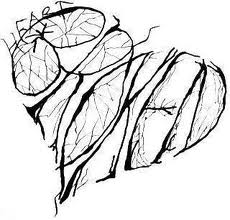 We have all been through times when we beat our chests, and moan from a place so deep within us that the moaning is inaudible, except at extreme volumes, in our own ears. We might not have had a husband move out, but we have had our heart so broken that we were not sure how to keep going, how to keep it beating, how to keep breathing … how to stay … alive.
 The growth of that seed results in the decay and destruction of the heart and soul of young and developing young woman. As it’s lies take root in the young lady, it pushes aside and alters the intended growth and development of that young lady. She becomes something that she was never intended to become. She increases in insecurity, she decreases in her understanding of her own abilities and value. She looses her own self in the lie.











 itsawonderfilledlife