I love words!
There is nothing that makes my heart skip a beat like hearing or reading or singing words that seem to grab my ears and yell “we are for your ears, listen!” If I was listening (who doesn’t hear what is yelled?) I would then spend the next minutes, hours and even days pondering them. Turning them inside out, to see if I am really getting all that they say, because I know they are for me and I don’t want to miss one syllable of their message.
I love it even more when those same loudly proclaimed words take me away to a different place in my mind, to a different place in my soul. Sometimes those words will even force me to make time for them.
This happened one day last year (don’t you love it when only a couple of weeks ago can be referred to as ‘last year’?). As I was singing along in church one Sunday we sang a song, and one line, “forgiven so that I could forgive” yelled at me, and it (and the rest of the song) been yelling almost daily since.
It is a song performed (and written) by the group Delirious. The lyrics could mirror the words of David in his Psalms. They recognize the ranking of the one who has sacrificed as higher than any other (to refer to one as his/her majesty is the highest position possible) on the earth. The lyrics speak of thanks, of grace, of love. It is a song of recognizing the redemption made available, and of receiving it in the humility of one who is redeemed.
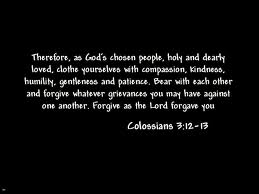
For us to understand that we are forgiven is, I believe, a concept not easily or quickly learned. Maybe it is because we struggle to forgive others, and in our own struggle to forgive we do not comprehend the forgiveness that is offered to us? Maybe we can forgive others, but we do not forget the original offense? Maybe we have the order of learning forgiveness wrong?
Perhaps it is in being forgiven that we learn how to forgive. Perhaps we cannot fully forgive another, until we have received (and that offer is always there for us) the forgiveness that is foundational to understanding how to forgive others. And maybe, it is a lesson that we keep learning all of our days.
 Impressions come in many forms. There are the impressions we make on others, either by how we look, or act, or how we make them feel. There are also impressions, like the ones that imprint a physical lasting mark, like a tattoo or a scar.
 scar, forever there to remind me of that vow I made with my words.
 A new year is a new beginning. It is a fresh, clean canvas. It is unmarred by blemishes or errors. It is empty.
 Since it is still the first week of January, I figure it is not too late to talk New Years resolutions.
 Many of us awake today, January 1, 2012, on the same day that we went to sleep. Whether we were at a rousing house party, a midnight mass, dancing with friends, drinking a warm cup of milk alone in the quiet of the night, or watching the ball drop in New York City (live, or, more likely, on the tube) we saw the new year in.
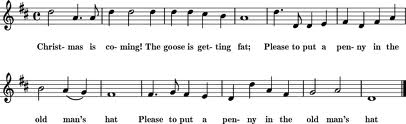 The language of the poem takes me to the time of Ebeneezer Scrooge, perhaps during the Industrial Revolution (late eighteenth to mid. nineteenth century), when child labor and beggars or every age were a norm. I have in my mind a picture of a weathered old man saying this rhyme with a Cockney English accent, while holding out his tattered hat to passers-by.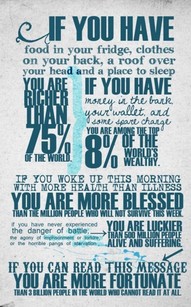
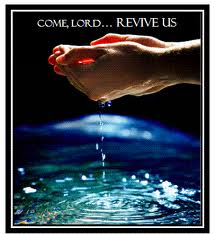 So, recently, I was checking out the song “Allelujah, Thine the Glory” by the group The Museum (who ‘borrowed’ the chorus from the hymn written in 1863, by William P. Mackay, then added their inspired verses). It is such an easily singable piece of music, with strong biblical theology throughout each verse.