Feeds:
Posts
Comments

Archive for the ‘WONDER’ Category

I didn’t really get it fully, until the consequences were too close to home … actually they weren’t just close to home, but they reverberated from the foundation right up to the top of the roof.

The it I refer to is the very real necessity and freedom to use sick days, provided through our employment benefits, as mental health days. To understand that a conflicted heart, a weary soul, an unwell brain are as valid a sick day as vomiting, a migraine or even symptoms of Covid is to have evolved as a worker, an employer and a society.

On a website called Bored Teachers I read this quote :

“My first year of teaching, my principal looked at me in the eyes and told me that sick days were for my mental health too, and to never forget that. It was the best advice anyone has ever given me.”

We have all heard people brag about their unused sick days, even referring to them as banked, as if in not taking sick days they had made an investment.

Though there are those of us who are truly blessed with good health, the goal of sick days is not to accumulate them, but to have them available when employees are ill … when they cannot do their best work.

Sometimes it is not just when we are physically ill that we cannot do our best work, but when we are emotionally or mentally exhausted.

Added to this, though we may be able to push through and do good work even when we are not feeling best, we may do more danger to ourselves by living by the mottos of keep calm and carry on, push through the pain or just get through the day. Heart disease, digestion-related problems and infections are just three of the areas of our physical bodies that can be negatively effected by ignoring our mental health struggles.

Mental resilience or grit is a great life goal, but it can only be developed within a well rested (physically and mentally) individual.

In the Bible there are numerous accounts of Jesus take a mental health day.

Ok, so maybe that is not how it is worded in these narratives, but … they are instances when the work was still needing to be done, yet Jesus either sent his disciples away, or he removed himself from the work at hand for a time.

After hearing of the death of John the Baptist, “he (Jesus) withdrew from there in a boat to a desolate place by himself” (Matthew 14:13).

As the crowds were gathering, Jesus said to his disciples, “come away by yourselves to a desolate place and rest a while.” For many were coming and going, and they had no leisure even to eat” (Mark 6:31). Now, the passage goes on to say he had compassion on the crowds, then fed them … some times we do need to push through! But, then, once they were fed … keep reading :

After feeding the five thousand he sent them away, “and after sending away the crowds, he got into the boat and went …” (Matthew 15:39). He sent them away and then he got outa town.

After teaching for a period of time it says, “leaving the crowd, they took him with them in the boat, just as he was” (Mark 4:36). He needed refreshment and separation from the task at hand.

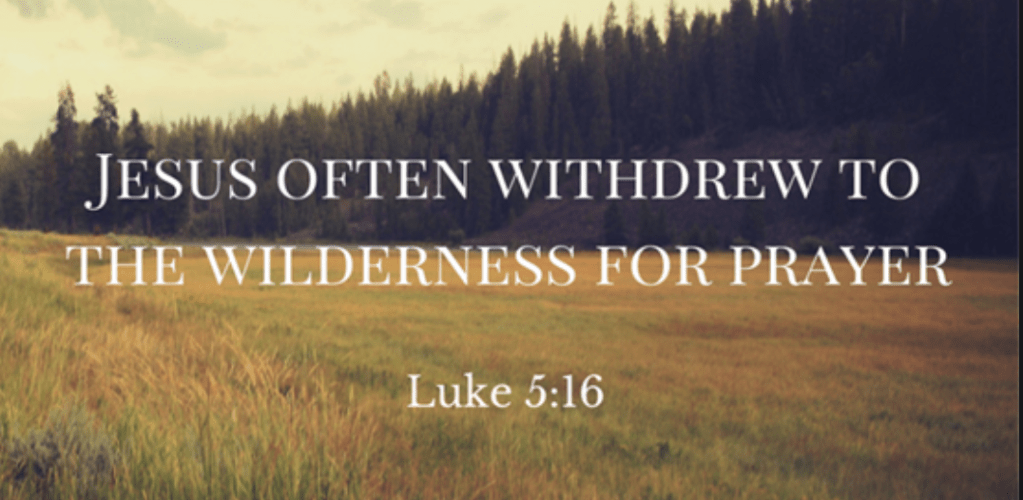
“Great crowds gathered to hear him and to be healed of their infirmities. But he would withdraw to desolate places and pray” (Luke 5:15-16). Take note of this … he withdrew and prayed … when we take a mental health day, Netflix is not our top priority, but intimacy with and rest in Jesus!

“And he entered a house and did not want anyone to know …” (Mark 7:24)

“They went to a place called Gethsemane, and Jesus said to his disciples, ‘Sit here while I pray.’” (Mark 14:32)

Sick days are for those who are sick, who cannot do their job best, be it a sore throat of a muddled mind.

Though it has taken me years to understand the validity of mental health days, I have seen the long term results of pushing through to meet the needs of the crowds.

“Yet He frequently withdrew to the wilderness to pray.”
Luke 5:16

(* and if you take a needed mental health day, don’t just withdraw, but pray … it is the best filling for emptiness)

Read Full Post »

Happy birthday to our West Coast girl! Born twenty-four years ago … about nine months after we arrived here, to this place we now call home.

But it has always been home for you. The addresses may have changed, the occupants too, but home for you is the west coast, it is where you belong.

I associate your birth with spring, blooming magnolia trees and Easter … these are parts that are always part of your life, your home.

Though you do not live at my home anymore my mother heart will always think that my home is yours too.

I will eagerly make a place at the table, have a blanket ready to cover you as you snooze on my couch or bed, invite you to help trim the tree … all because your moving out on your own does not make you less a part of my home.

When you come to visit, I send you back to your place with food or flowers or goods … because I want to share a little of my home with you.

I plan and plot when I know that you are coming, hoping that you feel at home when you are here.

Honestly, it is never long enough and my selfishness bristles when you’re running late, or have to leave early. But, that is my problem, my expectations and I remind myself that to have you for a little while in my home is blessing. And I am thankful that you’ve come.

You see, when we parents have a home that we have built for our loves we want them to love being here as much as we do. I guess we parents have to learn from nature, from the birds that encourage and even push their birds from the nest they’ve made … because that is the way.

Just days before your birth we celebrated Easter and your presence inside of me brought me different and intimate understanding of the Spirit within us. Though we are the residence or home of the Spirit, it is the risen Jesus who gives us home feels like none other. I remember reading (just days before your birth) “when everything is ready, then I will come and get you, so that you can always be with me where I am” … this is the home without me needing to do any of the preparing, the cooking, the cleaning … I just have to show up, and I will be home.

The magnolia trees outside our home are beginning to prepare to bloom in the warming spring sun. They whisper to me your name, remind me of your pink skin … they remind me of when we brought you home.

May today be the budding of spring in your life. May you know the security, the warmth, the nourishment and the love of home. May you know this, your original home, with your dad and I, always has a door open, a place at the table, a room to rest your head, a warm hug …

love lives here for you.

Happy birthday my west coast girl.

Read Full Post »

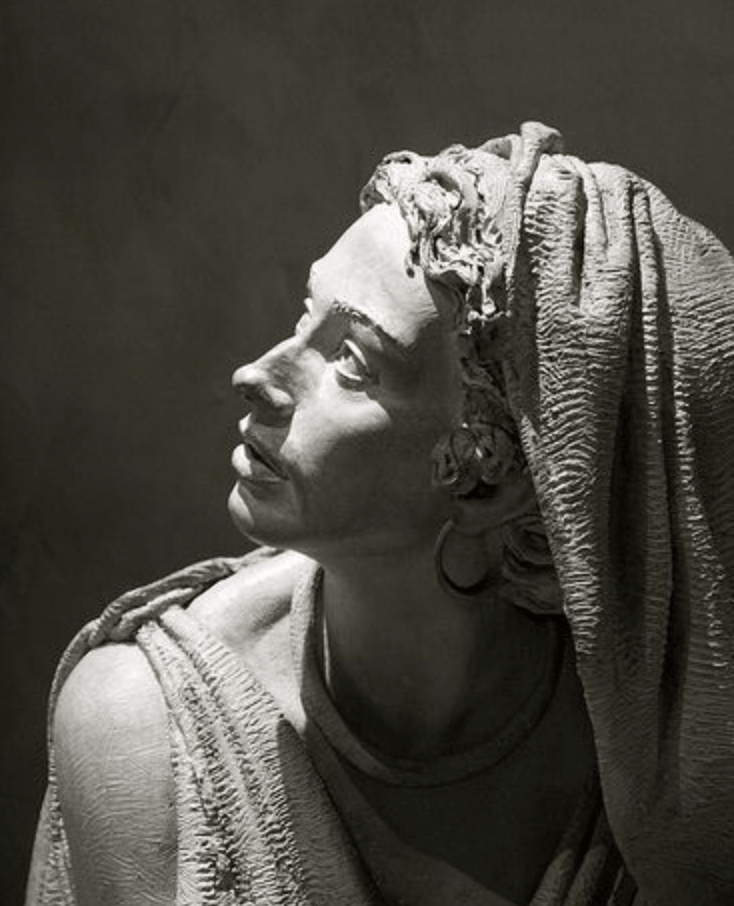
From the bronze statue by Bruce Wolfe of Christ and Mary Magdalene at the Old Mission in Santa Barbara

The angel spoke to the women who came to the open and empty tomb,

“He is not here, for he is risen, just like he said.”

He is risen … and we who are his followers respond,

He is risen indeed

Those are the words of affirmation that Christ did what he said he would do (as recorded, before his death on the cross). He has conquered death.

These are the words that have even more beauty and weight and value. They spoke the prophetic anticipation waited and prayed for far longer than any vaccination. The words, he is risen, speak not just victory over a virus, but a victory over our human genetic condition of sin.

He paid a debt he did not owe, because we owed a debt we could not pay. Our only hope has ever been his sacrifice and we have hope because died and defeated death on our account.

Our Christian faith hinges on the resurrection … if it had not happened, then Jesus was not the son of God … but it did, there were multiple witnesses in multiple places … our faith is in the living, resurrected Christ (hallelujah!).

This Holy Week, I have been asking these questions:

  • how did the disciples not know what was going to happen as they ate with Jesus?
  • what if I were there?
  • what happened to open the eyes of those who met him on the road?

On the third day Jesus appeared to a number of people who did not, at first, seem to know who he was. These were not people unfamiliar with him, but family, friends, the disciples. Remember, it was only a week since his triumphal entry into the city, only four days since the supper in the upper room, only three days since his public crucifixion.

Depending on the Gospel, Jesus is seen by one or more women at the tomb, or to a few disciples fishing on the Sea of Galilee, or on a road, or in the upper room … what we do know from these accounts is that the risen Jesus was seen by numerous people … witnesses to this miraculous fulfilling of the prophesy.

But there are three occurrences when people who were close to him did not recognize the risen Jesus.

Luke records that two disciples walked and talked with Jesus on the road to Emmaus, and “but they were kept from recognizing him” Luke 24:16). John (20) tells of Jesus talking with Mary Magdalene and until he called her by her name she did not see who he was. Then in John (21) Jesus walked on the shore of the Sea of Galilee while a number of disciples fished, unsuccessfully. Jesus told them to throw the net to the other side of the boat, which resulted in an enormous catch … then Peter knew who is was and leapt from the boat into the water (not on the water this time).

So why? Why did these people, who knew Jesus so well, prior to his death, not know him now? And what caused their eyes to open?

Some theologians say it was that Christ had a different, glorified body. That they did not recognize him because he did not look like the human Jesus they knew.

But, that account in Luke, that they were kept from recognizing him … that sounds like his identity was intentionally kept from them, yet it is not part of the accounts of John.

As I read them, I found myself wondering if these accounts tell us something of how God reveals to each of us in ways that are specific to us and how he created us.

In the case of the the pair on the road to Emmaus, they told Jesus what had happened, about the death of the prophet. It is this title that, I think, says much about their understanding of Jesus. They thought he was a wise man, who could speak to things about the future. It was not until later, as they ate and Jesus broke bread and offered it to them “then their eyes were opened and they recognized him” (v. 31). In their cases, Christ himself chose when to allow them to see who he really was … for before they spoke, he knew that they’d only ever seen him as a prophet, that they would need to see him as he really is.

In the case of Mary Magdalene, she was absorbed in her grief. She was downcast. Her focus was really not on Jesus, but herself. But when he called her by name, then she turned her focus to him, abandoning her pity party.

The disciples in the boat were also in a funk. They were deep in grief and loss and they couldn’t even catch a fish. Their identity had been as fishermen and as followers of Jesus … and they were now unsuccessful in both. It was not until Jesus told them to move their nets and they were filled with fish, that they remembered that their abilities, their value was in who Jesus said they were … and they saw him for who he was.

We, I believe are like these individuals, when it comes to seeing Christ for who is really is.

Some of us have an appointed time to see him.

Some of us need to lift our eyes from ourselves to see him.

Some of us need to be reminded that our identity is in him, rather than what we do.

May, this Easter, we see Him, with eyes opened wide.

He is risen

“The pure in heart,
they shall see God” 
Luke 24:16

Read Full Post »

This Holy Week from Palm Sunday to the following (Easter) Sunday I am contemplating how it is a week of preparation and prophesy fulfilled, a pendulum-shifting drama that swings from joy, to sorrow then to an even greater, impossible triumph.

As this Holy Week has progressed, I have found my heart and mind to be asking three questions:

  • how did the disciples not know what was going to happen as they ate with Jesus?
  • what if I were there?
  • what happened to open the eyes of those who met him on the road?

I need to admit that if I were there, in the time and place of the crucifixion,

I wouldn’t be there!

There is nothing within me that could imagine a reason for choosing to watch a trial (with the potential for a corporal punishment), view another human being carry what would be their cross up a roadway full of angry people spewing vile words and spit, or watch that same human nailed to the cross where he would live out his final hours in agony.

I just wouldn’t be there!

But … when I read the story, I do insert my heart into it.

One thing that I ask myself, consciously or not, when I watch a story enfold (true or fiction), is what character can I most connect or associate with? Once I can associate with someone in the story, then I am there, in the words and drama that enfolds.

The events of Holy Week are always digested in my mind and heart through the person of his mother, Mary.

Her appearance in the accounts of this week is at the foot of the cross.

Each of the four Gospels mention her presence by name, Luke is presumed to include her when he wrote, “and all his acquaintances and the women who had followed him from Galilee stood at a distance watching these things” (Luke 23:40).

She was there … there at the foot of the cross, looking up at Jesus, her son … her child.

As a mom, reading the accounts of what happened to him, I feel emotionally gutted. To try to imagine a mom observing the torturous, stretched-out death of one who had grown inside of you, who you’d nourished at your breast, who you’d cared for, loved and protected … well, I really don’t want to imagine it. But, when I read the accounts of what happed I cannot help but associate with Mary, his mother. I cannot help but mourn for her … for what she would have to see, and hear, and know.

She saw that sign (Mark 15:26),

KING OF THE JEWS

She heard the insults, the mocking, the taunts to save himself (Mark 15:29-32).

She heard him cry out “my God, my God, why have you forsaken me?” (Matthew 27:46).

She heard him cry out “I thirst” (John 19:28).

She heard his final words, “it is finished” (John 19:30) and her child was no more.

She heard and felt the earthquake (Matthew 27:54).

She probably heard the centurion guarding Jesus on the cross say, “surely he was the Son of God!” (Matthew 27:54).

“When Jesus saw his mother there, and the disciple whom he loved standing nearby, he said to her, “Woman, here is your son,” and to the disciple, “Here is your mother.”” (John 19:26-27). In his final hours, he ensured the care of his mother, after his death, for he knew that she would need a home.

Throughout all that she saw and heard that day, I wonder …

I wonder if she heard words from the past echo in her heart and soul. Words that were prophesy about her …

“And a sword will pierce your own soul too.”

These were the words spoken to Mary, by Simeon (Luke 2:35), when Mary and Joseph brought Jesus, as a baby, to the temple to offer him to the Lord.

Did she hear them, over and over, as she saw and heard all that was going on? As her son suffered? As her heart ached?

As a mom, I read this Holy Week story and experience it all through the heart of a mom … and my soul too, is pierced.

Read Full Post »

The Feast in the House of Levi” by Paolo Veronese

These days from Palm Sunday (marking the triumphal entry of Jesus into Jerusalem) to the following Sunday (marking the rising of Christ) are known in the church calendar as Holy Week.

This week is one of preparation and prophesy fulfilled. It is a pendulum-shifting drama that swings from joy, to sorrow then to an even greater, impossible triumph.

As I have been contemplating this Holy Week, I have found my heart and mind to be asking questions.

These questions I am focusing on as I walk through the week, remembering the events and how they enfolded, bringing myself into this great drama.

These are my queries:

  • how did the disciples not know what was going to happen as they ate with Jesus?
  • what if I were there?
  • what happened to open the eyes of those who met him on the road?

As soon as Palm Sunday passed, my thoughts moved to the final meal, the last supper of Jesus with his ragtag group of disciples.

It boggles my mind that the disciples could have sat, eating with their leader and friend, listened to the words he said, observed actions (Judas) and words of Jesus and of others … yet they seemed clueless to what was happening, what was to happen.

… but I read the Gospel accounts with the benefit of hindsight

Like a person grieving the earthly loss of one held dear, reminiscing over and over again the actions and words spoken by their dearly departed, we can read the accounts of the Last Supper knowing what comes next. Therefore, we read the words with limited possible meaning.

The meal itself was not simply a final meal between friends, but the annual observance and celebration of the Feast of Unleavened Bread. This feast represents the end of the plagues brought to Egypt as a result of their refusal to , as Moses said, “let my people go.” The Jews were saved by painting their doorposts with the blood of lambs, so that when death came by, the blood would prevent it from entering the household … thus it passed over (Passover) their homes. This seder meal was part of a seven day feast, when the only bread eaten would not have been the puffy, yeast-risen bread, but the flat and crispy Matzah type.

Perhaps it is because of this cultural and religious event that the disciple’s minds were not on the future that Jesus was speaking of, but the past. Perhaps all they could see and hear in words of their leader were simply Even Jesus himself said, “I am going to celebrate the Passover with my disciples” (Matthew 26:18).

Though we see the parallel of celebrating the Passover feast (which celebrated the saving of the Israelites by the blood of the lamb) with the very Passover lamb (whose blood was spilled to save them, us all) … they just saw the observance of a festival.

This Feast of Unleavened Bread … they celebrate it with the very one who said, “I am the bread of life” (John 6:35), but they were just looking for physical (not spiritual) nourishment.

This unleavened bread, a reminder of fleeing Egypt, before their bread rose to wander in the dessert. No yeast was to come with them … symbolizing their need to leave their sins behind them. Jesus, sharing their table, was to become like yeast in their lives, growing and spreading his message of redemption.

These Jesus-followers were primitive mortals who knew only in-part as they sat down to feast with their fearless leader. In the days to come, their eyes would be opened to the drama being written as they simply enjoyed a good meal, drink and companionship around the table.

The banquet was just beginning.

*This video (below) presents a discussion of the Veronese painting (above) and compares it to that of Leonardo da Vinci … this comparison, in my mind contrasts how the disciples might have experienced the Last Supper with Jesus (Veronese) to how we see the Last Supper (Leonardo).

“in some ways it just looks like a banquet, and not a Last Supper”

Read Full Post »

My first memories of Palm Sunday were as a young child, on a bright Sunday morning, in my grandmother’s church, deep in the rural woodlands on Canada’s East Coast. The children of the Sunday School were each given a palm branch. At a designated point in the Sunday service we were to walk from back to front and back again in the sanctuary, waving our branches and saying

“Hosanna!”
“Blessed is he who comes
in the name of the Lord!”
“Blessed is the king of Israel!”

The congregation smiled encouragingly. Then the pastor instructed all to join in our joyful, hope-filled announcement.

Shortly after, the service ended and we all went home.

Palm branches and excitement over the arrival of a man, a king, on a donkey all but forgot.

This is what Palm Sunday is … excitement then apathy, it is the height of the people’s love for this king, yet it leads to the hardest week for Him, as he walked the road to sacrifice so as to provide the way for the greatest height for us.

This triumphal entry, parallels, yet so different from his pilgrimage on the Path of Sorrows (Via Dolorosa) to Calvary. This trek, leading from his place of torture and sentencing, to his place of death. No palm branches, no joyful, hope-filled exclamations from the crowds in the street.

Today, Palm Sunday, joyful and hope-filled as it was, as it is, is a window into the fickleness of our human race. In less than a week, those who followed him went from

“blessed is he who comes
in the name of the Lord!”

to

“crucify him”

We, who follow him today, are not that different.

Palm Sunday is the beginning of the end, of the beginning. We must check our cheers of hallelujah today … ensuring that our joy in Him lasts longer than this day. For darkness will come into each of our lives and we will need this King to save us.

A Sonnet for Palm Sunday
Malcolm Guite

Now to the gate of my Jerusalem,

The seething holy city of my heart,

The saviour comes. But will I welcome him?

Oh crowds of easy feelings make a start;

They raise their hands, get caught up in the singing,

And think the battle won. Too soon they’ll find

The challenge, the reversal he is bringing

Changes their tune. I know what lies behind

The surface flourish that so quickly fades;

Self-interest, and fearful guardedness,

The hardness of the heart, its barricades,

And at the core, the dreadful emptiness

Of a perverted temple. Jesus come

Break my resistance and make me your home.

Read Full Post »

As we walked along the forest trail it wasn’t the heights of the trees around me, not the brook noisily flowing past, but the moss growing on the trees that captured my attention.

Lush, soft, growing in varying amounts on every tree and stump. It drew one’s eyes to it simply because the rest of the forest, in early spring, was still in it’s winter slumber. Only the emerald green of the moss dotted the landscape with colorful life.

Moss does not harm trees, unless the weight of it, saturated with rainwater grows to the point that the stability of branches is in question. It just simply lives and grows on them, adding mystical appearance.

Moss growing on a tree is an example of commensalism it gets a place to live and grow and the tree neither benefits nor is harmed. Basically, moss is simply a squatter on the tree.

At least that how science would define the relationship.

But, as I walked amid the moss covered forest trees, I saw things differently.

That rich, life-filled moss drew my eyes to the tree that, otherwise, would have blended into the forest of trees. It stuck out, brought joy, delight in the showy example of living brightly in a dark and shady place.

Though the tree is not harmed or benefitted from the moss growing there, I was indeed benefitted.

Sometimes, as a follower of Christ, as one who lives and desires to be light in the dark, be living water amid the murky depths in our world …

it can feel as though we are like moss on a tree …

growing and living,

but never having an impact on our host (the world).

It can seem, perhaps, that we are so busy with our own living, that we don’t bring Jesus to those around us.

As though, like the moss on the tree, we are simply living our life, without any impact for Christ on our surroundings.

Psalm 34:5, a Psalm of David, tells us:

“Those who look to Him are radiant with joy;
their faces shall never be ashamed.”

We, who are followers of Christ, have looked on his Crucified self … sacrificed for us, for the world. But we have not only looked, we have accepted that his sacrifice was for our own good. That “he was pierced for our transgressions, he was crushed for our iniquities; the punishment that brought us peace was on him, and by his wounds we are healed” (Isaiah 53:5). And in seeing the reality of the purpose of his crucifixion, we reflect, or radiate joy that is found only in Him.

This joy that we radiate is not only seen by God, or by his followers, it is also seen by those around us. It is seen by those walking though along beside us,

standing out like moss on the trees in a forest in early spring.

Like that moss, we can have an impact (if we live as followers, growing from the word as our nourishment). Though we are busy we still bring something to the forest in which we live …

we bring beauty

Isaiah 33:17 tells us,

Your eyes will see the King in His beauty;
They will behold a far-distant land.

We reflect this beauty of the King and He in us will allow others to imagine life and eternity with HIm.

All we have to do is bring beauty to our dark and murky world.

Read Full Post »

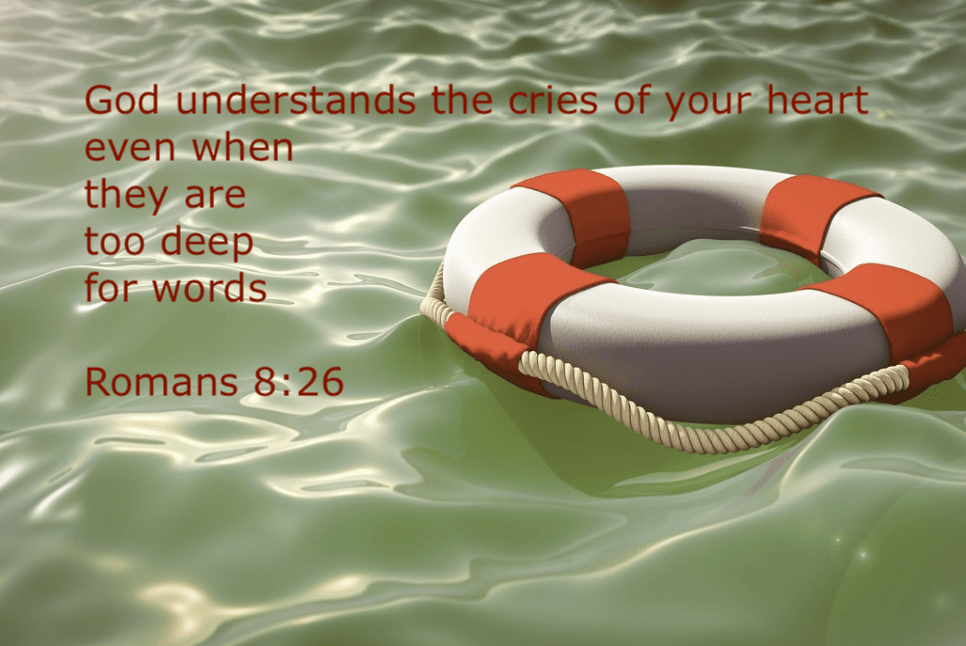
One of our daughters spent many hours working at swimming pools. Phrases like extend your reach, keep your head above water and throw a lifeline were commonly heard in that water world.

Lately, I have been reminded of lifeguard strength, mentality and the necessity for everyone to have a lifeguard-type person in our lives. As a matter of fact, I think we are all lifeguards.

To throw a lifeline (according to freedictionary.com) is :

“to give someone help 
or a means of dealing with 

a problematic or dangerous situation, 
especially if they are desperate 
or are unlikely to succeed on their own”

Who doesn’t need a lifeline at different times in their lives?

Maybe it is a phone call, assistance with a task, a card, or flowers brought to your door. Maybe it is childcare, or a visit, or a meal delivered. Perhaps it is just (as if just is appropriate when one is in need) a kind word.

Such expressions of help are like lifelines to safety and security. They can be just the best examples of us as the very hands and feet of God.

Read Full Post »

It’s spring!

Is it just me or does it seem that winter lasted an entire year?

Though Easter came and was celebrated, last spring. Though the days got longer. Though the weather warmed. Though we experienced vacation time and even a bit of (more local) travel. The restrictions and cautions connected to this Covid pandemic have made it feel as though, like in Narnia,

““It is winter in Narnia,” said Mr. Tumnus, “and has been for ever so long…. always winter, but never Christmas Spring.””

This year, as the calendar, the news and even Google’s search bar announces the start of spring … it actually feels like we might get to experience the hope that spring heralds.

Many have already received one (or two) shots in the arm of vaccination against the Covid virus, with many of us awaiting our turn at, what I like to call,

the arm jab to a more normal existence

With this rollout of the vaccine, we feel a spring in our steps, hoping that things like travel, concerts, sporting activities, church services and hugs will soon come back to us, to our open arms.

This past year has been the liminal time … between what was and what is to come.

And I wonder what is to come …

The experts on business are discussing the probability that working from home will be around long after the globe is vaccinated. That online ordering and curb-side pick up of various goods will continue to increase in popularity. That people will continue to make more meals at home. That online meetings will continue to be utilized. That shopping local will carry on.

Will churches continue to offer online services, realizing that they are not just an opportunity in a pandemic, but an option for distanced connection? Will school districts and private schools consider how beneficial distanced education was for the students who struggle with anxiety, or who simply learn better with less distractions? Will restaurants, pet food stores, grocery stores and pharmacies continue to offer home delivery and curb-side pick up? Will doctors keep a few appointments available for online patient care? Will we continue to look at nurses, doctors, grocery store employees, emergency workers and delivery drivers as cheer-worthy?

Will we continue to look into the eyes of people passing by?

Like the season of spring heralding the switch up of weather, plant growth, daylight, activities and wardrobe changes, the vaccines can lead us into the time after the pandemic … from the liminal to whatever is to come.

And this puts a spring into my steps.

Read Full Post »

Soon I will turn fifty-two … Still in my early fifties (this is my indirect pointing out that I am not that old yet), still very much an active mom (does that ever change?), still very much in love with my guy (I hope this doesn’t ever change), still experiencing the close relationship with my own mom, enjoying my work, my (socially distanced) church, friends and activities.

I am still very much alive.

I have reached that stage of middles … though I do not expect that fifty-two is the middle of my life, that I will live to be called a centenarian.

I am in the middle of adult children and parent, loving my job yet looking forward to days when I don’t have to rush out the door, anticipating retirement and considering further education and a career change, purchasing (a new home, stuff) yet purging, planning for the future yet seeing the future’s end, loving my guy and fearing he might die before me (my plan is me first).

I am stuck in the middles …

and (much of the time) I absolutely love it!

From this vantage point, I have learned that my life needs to have more of two things and less of one.

More doing …

At this stage of life I know that I am on the other end … awareness of the brevity of this life tends to remind one to make the best use of this time. I need to be doing more with my time (this might be something I need to focus on this coming year). As an introvert I can make up so many excuses to not be doing things (other than making a puzzle, watching a British Crime Drama, etc.) … but I have this niggling in the back of my mind that I now have time and energy and ability that might not always be at my disposal. I need to move, to do the things I might not always be able to do, now.

Less speaking …

Greek philosopher Epictetus is noted as having said,

“We have two ears and one mouth so that we can listen twice as much as we speak.”

In our world today, with social media posts, tweets, sound bites and bloggers (ahem … preaching to self here) it is all too easy to speak our truth and not take time to hear from others (other than their social media posts, tweets, sound bites and blogs). The beauty of being in the middle is that you have opportunity to hear from the past and the future … the struggle is to remember to do listen and listen twice as much as we speak.

Love more …

To love others costs nothing, but reaps the greatest of rewards … a regret-free existence. Actually to love more does cost, but it’s cost is my pride and to reduce my pride is to be more in the black than in the red. I want, when I die, not for people to say I spoke the truth, but that lived the truth … in word and in action. I want to leave this world and those around me, better … less damage, more healing. I have seen what damage can be done when there is an absence or withholding of love in generations … love is the better way.

I will show you the most excellent way (1 Corinthians 12:31) … the greatest of these is love.” (1 Corinthians 13:13)

Read Full Post »

« Newer Posts - Older Posts »

Lessons from a Lab

From My Daily Walk with the Lord and My Labrador

From The Darkness Into The Light

love, christ, God, devotionals ,bible studies ,blog, blogging, salvation family,vacations places pictures marriage, , daily devotional, christian fellowship Holy Spirit Evangelists

Karla Sullivan

Progressive old soul wordsmith

Becoming the Oil and the Wine

Becoming the oil and wine in today's society

I love the Psalms

Connecting daily with God through the Psalms

Memoir of Me

Out of the abundance of my heart ,I write❤️

My Pastoral Ponderings

Pondering my way through God's beloved world

itsawonderfilledlife

FIXING MY EYES on wonder in everyday life

Perfectly Imperfect Life

Jesus lovin', latte drinking, dog lovin', Kansas mama and wife.

What Are You Thinking?

I won't promise that they are deep thoughts, but they are mine. And they tend to be about theology.

Sealed in Christ

An Outreach of Sixth Seal Ministries

Amazing Tangled Grace

A blog about my spiritual journey in the Lord Jesus Christ.

Following the Son

One man's spiritual journey

Fortnite Fatherhood

A father's digital age journey with his family and his faith

Forty Something Life As We Know It

I am just an ordinary small-town woman in her forties enjoying the country life. Constantly searching for wisdom on a daily basis.